Live streaming has revolutionized content consumption, especially in areas like corporate communication and sports broadcasting. With a significant percentage of sports fans opting for streaming services, the need for accessible and multilingual content is at an all-time high. Traditional methods of live captioning and translation can be prohibitively expensive, often limiting organizations to a few languages and excluding many potential viewers, including those who are deaf or hard of hearing and non-native speakers.
AWS Media Services offers a solution by enabling the automatic generation of high-quality captions and translations in various languages, significantly lowering costs and broadening global reach.
This article serves as a guide for professionals involved in the decision-making, technical evaluation, and implementation of live streaming localization and accessibility projects. It provides insights into current industry developments and technologies that enhance accessibility in live streaming.
For content creators, reaching a global audience is crucial. Providing multilingual subtitles and dubbed audio can unlock new revenue streams and enhance viewer engagement. By removing language barriers, businesses can tap into previously unreachable markets and maximize their content investment returns.
Traditional audio transcription and dubbing services often restrict content accessibility due to high costs. This guide illustrates how cloud-based services can lower these barriers, making it feasible for various organizations to offer accessible live streams across languages and abilities.
Before diving into implementation, a fundamental understanding of live streaming architectures is essential. Resources like AWS's guide on resilient live streaming architecture can provide the necessary foundation.
Key Integration Points for Localization
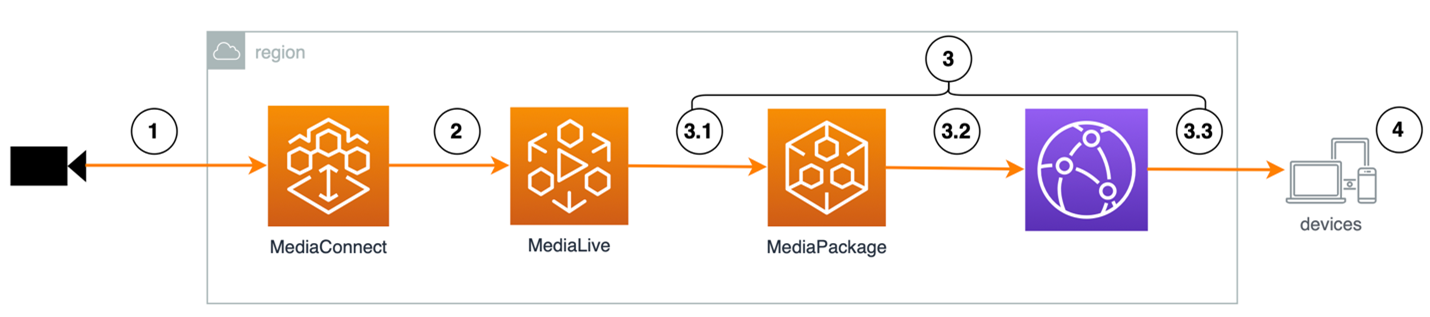
For high-value live streaming events, a robust architecture is vital. This guide emphasizes adding localization features such as captioning, subtitles, and audio dubbing as modular components to your streaming setup. Here are the main integration points to consider:
- Integration Point 1: Use this when you have an existing caption solution. The live stream is processed through your captioning solution before being sent to the cloud.
- Integration Point 2: Here, the live stream is in the cloud, and captions are added before transcoding. This method allows for embedding captions into the stream.
- Integration Point 3: This involves appending additional subtitle and audio dubbing tracks to the main video manifest, allowing seamless integration without language limitations.
- Integration Point 4: This client-side integration delivers video and subtitles through separate paths, requiring modifications to the video player.
Integration Points 2 and 3 are often recommended for their ease of integration and deployment, while Point 4 is useful when the main video pipeline cannot be altered.
Case Study: SyncWords
SyncWords provides a live captioning and dubbing service that integrates localization features into live streaming using AWS Media Services. They simplify the integration process, allowing users to choose appropriate services for specific tasks, such as using cloned voice technology for dubbed audio.
SyncWords' SRT-based workflow supports multiple language captions with low latency, while their extended support for DVB Subtitle and DVB Teletext enhances flexibility in streaming applications.
Conclusion
This guide has outlined various methods for implementing live streaming localization and accessibility using AWS Media Services. By focusing on Integration Points 2 and 3, organizations can effectively enhance their streaming capabilities. Although challenges remain, advancements in technology promise to simplify implementation and expand language support, making localized streaming content more accessible to global audiences.